9 Oct 2026
Shifts in Player Demographics Within Austria's Virtual Casino Market

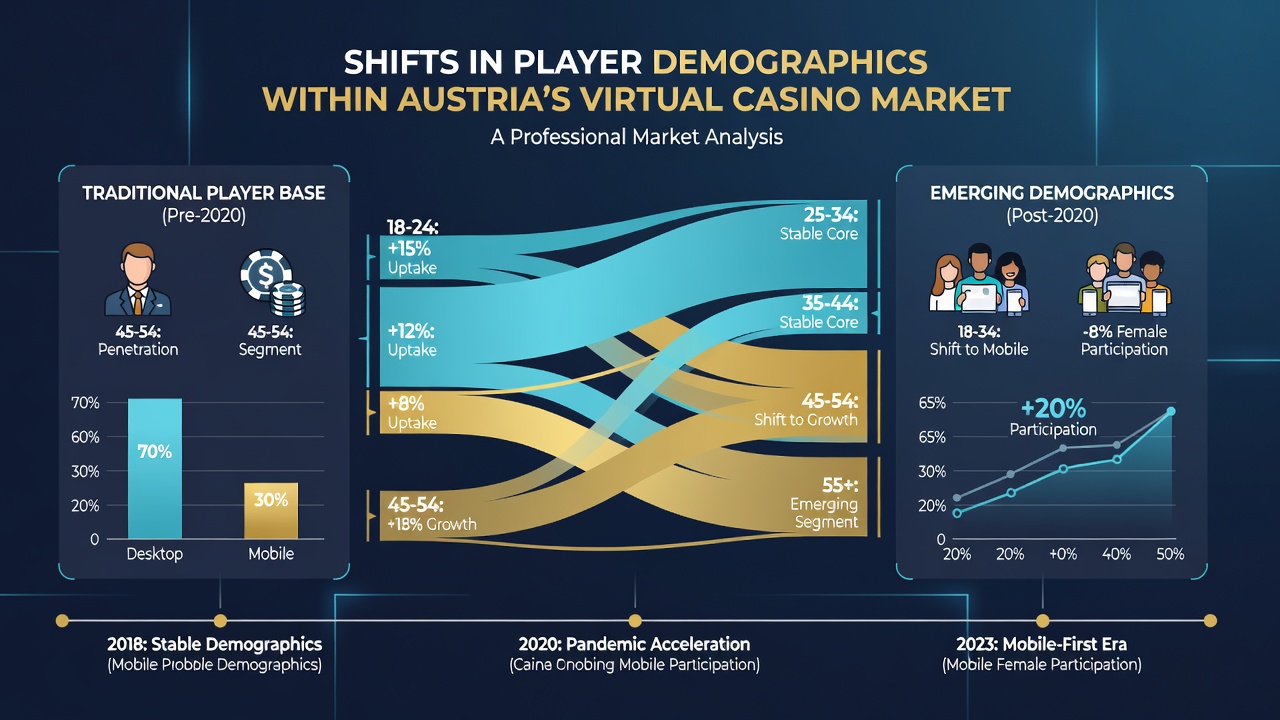
Player demographics in Austria's virtual casino sector have undergone measurable changes over the past several years, with data revealing shifts in age groups, gender participation, and geographic distribution across the country. According to reports from the Austrian Federal Ministry of Finance, online gambling participation grew steadily between 2021 and 2025, yet the composition of users evolved in ways that reflect broader digital adoption patterns and regulatory adjustments.
Age Group Evolution in Participation Rates
Younger adults between 25 and 34 years old increased their share of active accounts from 28 percent in 2022 to 37 percent by early 2026, while the 18 to 24 cohort expanded more modestly to 19 percent during the same period. Observers note that this trend aligns with higher smartphone penetration rates among these groups and the rollout of mobile-optimized platforms by licensed operators. Meanwhile, the 45 to 54 segment maintained steady representation around 22 percent, though absolute numbers rose as overall market volume expanded. Data compiled through operator submissions to regulatory bodies shows that players over 55 accounted for just 12 percent of activity in October 2026, down from 18 percent five years earlier.
Gender Distribution Patterns
Women represented 41 percent of registered virtual casino accounts in Austria as of October 2026, up from 33 percent in 2021, according to aggregated figures released by licensed platforms. This adjustment occurred alongside expanded game selections that include titles with lower volatility and social features, which researchers have linked to broader appeal across demographics. Male participation remains dominant at 59 percent, yet the gap narrowed as marketing campaigns targeted diverse audiences through regional media channels. Studies from the European Gaming and Betting Association indicate similar gender convergence trends across several EU member states during the same timeframe.
Geographic and Urban-Rural Divides
Urban centers such as Vienna, Graz, and Linz continue to generate the highest volumes of activity, accounting for 62 percent of total sessions recorded in 2026. However, participation from smaller municipalities and rural districts rose by 14 percentage points since 2023, driven by improved broadband access and localized payment solutions. Figures reveal that Tyrol and Vorarlberg saw the fastest relative growth in new registrations, while Lower Austria maintained the largest absolute user base outside the capital region. These patterns emerge from licensing data submitted to oversight authorities and cross-referenced with census information.
Influencing Factors Behind the Changes
Regulatory updates implemented after 2021 required stricter age verification and responsible gaming tools, which coincided with the observed demographic rebalancing. Operators adjusted their outreach accordingly, resulting in higher conversion rates among previously underrepresented segments. Research from the University of Vienna's Institute for Social Research tracked how economic conditions, including inflation adjustments in 2024 and 2025, correlated with increased engagement from mid-income households across multiple provinces. International comparisons appear in reports by the Australian Gambling Research Centre, which documented parallel movements toward greater female and regional participation in regulated markets.
Payment method preferences also shifted alongside demographics, with e-wallet usage climbing to 48 percent among the 25-34 group by October 2026 while bank transfers remained common among older cohorts. These preferences surface consistently in transaction logs reviewed during compliance audits.
Conclusion
The evolving profile of Austria's virtual casino users reflects measurable adjustments in age, gender, and location metrics through October 2026. Licensed operators and regulatory records provide the primary sources for these observations, revealing consistent patterns across multiple data sets. Continued monitoring through official channels will track whether current trajectories persist or stabilize in subsequent periods.